

The “Masala” in the Machine: A Manifesto for the Future of Indian Branding.
Introduction: The Algorithm and the Auntie
Picture this: It is 10:00 AM on a Monday. In a glass-walled conference room in Gurgaon, a marketing manager named Rohan types a prompt into MidJourney: “Indian family eating dinner, happy, traditional clothing, cinematic lighting, 8k.” In seconds, the AI churns out a stunning image. The lighting is impeccable. The pixels are perfect. But look closer. The family is eating Naan with a spoon. The “traditional” clothing looks like a strange hybrid of a Kimono and a Sherwani. And the smiles? They have that uncanny, hollow perfection that never quite reaches the eyes.
Rohan sighs. It’s beautiful, but it isn’t India. It lacks the Soul.
The Alchemy of Algorithms and Ancestry: Why AI-driven Brands in India require an Indian Soul to succeed
The contemporary Indian marketplace is currently witnessing a collision between the hyper-logical precision of Silicon Valley and the hyper-emotional chaos of Chandni Chowk. As Generative Artificial Intelligence (GenAI) embeds itself into the plumbing of the marketing world, the industry is navigating a transition where the “prompt” is often mistaken for the strategy. From the vantage point of a new-age Indian branding and digital agency, the observation is clear: while artificial intelligence can provide the scale of a million voices, it is the “Indian Soul”—that elusive mix of cultural nuance, regional fluency, and emotional resonance—that ensures those voices actually say something meaningful. The challenge for brands in 2026 and beyond is to move beyond the technical “magic” of the tool and return to the fundamental “motive” of the consumer. In a landscape where the digital ad spend has officially overtaken television, capturing 41% of the total advertising pie, the stakes for getting this balance right have never been higher.
At our agency, we see this scenario play out daily. We are living through the AI Tsunami. From ChatGPT writing SEO copy to Sora generating video, the tools at our disposal are god-like. But here is the hard truth that every Indian founder, CMO, and Brand Manager needs to hear:
You can automate the process, but you cannot automate the ‘Paisa Vasool’ emotion.
India is not a dataset; it is a feeling. It is a chaotic, colourful, cacophonous paradox that defies logic—and therefore, defies algorithms. As we stand at the precipice of a tech revolution, we argue that the more Artificial Intelligence we use, the more “Desi Intelligence” we need to survive in the Bharat market.
The Digital Renaissance: Contextualizing the AI Surge in the Indian Ad-Tech Landscape
The trajectory of the Indian advertising industry is currently being rewritten by algorithmic code. The artificial intelligence market in Indian marketing is projected to reach a staggering US$ 4,378.6 million by 2030, exhibiting a compound annual growth rate (CAGR) of 28.5%. This is not merely a quantitative increase in software sales; it represents a qualitative shift in how brands engage with a population of 1.4 billion. In FY 2024-25, digital advertising spends reached INR 40,800 crore, marking the first time digital has surpassed traditional television media. This milestone is fueled by the expansion of technology-driven companies and the explosive growth of e-commerce, but it also reflects a deeper change in consumer behavior: the “Always-On” Indian shopper.

The data indicates that the “Services” segment is the largest and fastest-growing revenue generator within this market, accounting for nearly 60% of the revenue share in 2023. This suggests that brands are not just buying AI tools; they are seeking strategic partners to help them navigate the implementation. However, there is a “Receptivity Paradox” at play. While 82% of Indian users are willing to accept AI-driven recommendations—a figure significantly higher than the global average—99% of their search queries are still focused on foundational definitions of advertising concepts. Indian consumers are trusting the output of systems they do not fully understand, placing an immense ethical burden on the agencies and brands wielding these tools.
Decoding the Indian Soul: Beyond Data Points to Cultural Psychographics
For a global brand, “India” often appears as a singular demographic on a dashboard. For a local agency, India is a “Mosaic, not a melting pot”. The failure to understand this distinction is the primary reason why global strategies often “skid off course” upon entering the subcontinent. The “Indian Soul” is defined by several unique pillars that an AI, trained predominantly on Western datasets, frequently fails to grasp without human intervention.
The Collectivist Decision Unit: Marketing to the “Joint Family”
In Western markets, a car or a subscription service is often marketed to an individual. In India, you are marketing to the driver, their spouse, their parents, and sometimes even their neighbors. The Indian social structure is deeply rooted in the family unit, making purchase decisions collective rather than individualistic. Even as nuclear families grow in urban centers, the “emotional umbilical cord” to the extended family remains strong. Products often serve as social signals within a community, meaning that what others think matters as much as the product’s utility.
This collectivism extends to the concept of value. There is a persistent myth that the Indian consumer is merely “cheap” or “price-conscious.” In reality, they are “value-conscious”. They are willing to pay a premium for a high-status global brand, but they demand to know exactly what tangible value they are receiving in return. A brand that uses AI to optimize solely for the “lowest price” without communicating “status” or “reliability” will find itself ignored by an aspirational middle class that views every purchase as an investment in their social standing.
Here is why AI-driven brands in India will fail without an Indian Soul, and how the best ones are using the machine to amplify the heartbeat, not replace it.
Section 1: The Great Indian Context Gap (Or, Why ChatGPT Can’t Speak ‘Hinglish’)
Let’s look at the numbers. India has over 820 million active internet users.
By 2027, it is estimated that rural India will drive the majority of new internet growth. We are a mobile-first, video-first, and increasingly, voice-first nation. However, India is also a graveyard for standardization. We change dialects every 50 kilometers. We have 22 official languages and thousands of unwritten cultural codes.
The “Tu” vs. “Aap” Dilemma
AI Large Language Models (LLMs) are trained primarily on Western data sets. They understand English perfectly. But they struggle with the Indian context of hierarchy and intimacy.
If a FinTech brand uses AI to generate a debt-collection script, the AI might produce: “Please pay your dues immediately to avoid penalties.”
Efficient? Yes.
Effective in India? No.
In India, that sounds rude, aggressive, and might lose you a customer for life.
A human copywriter with an Indian soul knows the nuance. They might write:
“Sir, just a gentle reminder regarding the pending amount. Let’s clear this up so your credit score stays healthy for that future home loan.”
See the difference? The second option taps into aspirations (home loan) and respect (Sir). It negotiates relationships, not just transactions.
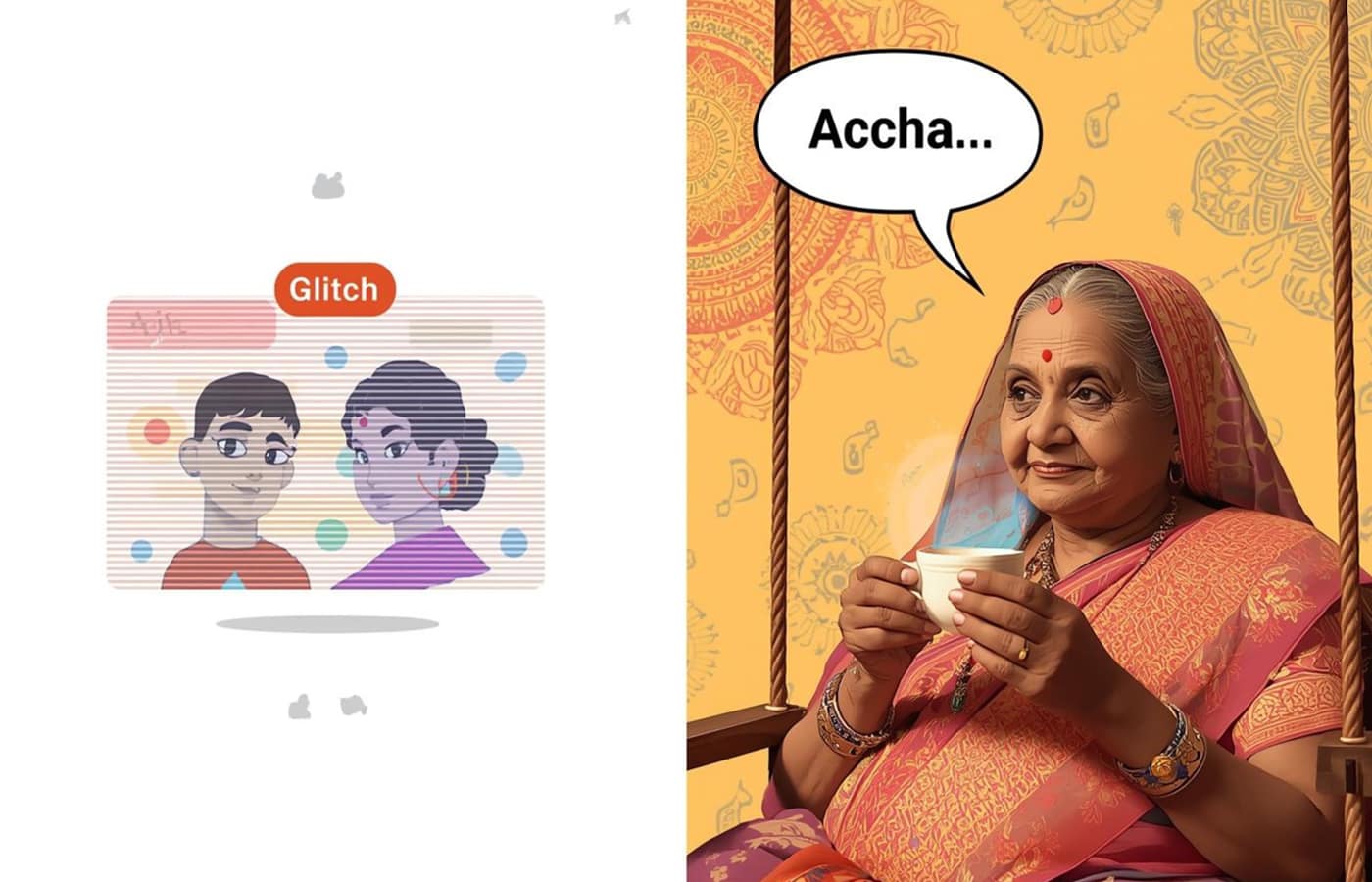
The “Accha” Paradox
Consider the word “Accha.”
“Accha” can mean “Good.”
“Accha?” can mean “Is that so?”
“Accha…” can mean “I understand, but I don’t care.”
“Accha!” can mean “Surprise.”
An AI sentiment analysis tool often flags “Accha” as positive. But any Indian brand manager listening to a customer service call knows that a long, drawn-out “Acchaaaaaa…” from a customer means you have lost the sale. Without the “Indian Soul” to interpret the tone, your data is flawed.
The Language of Trust: The Vernacular Surge
The internet in India is no longer an English-speaking club. 98% of India’s 820 million internet users access content in Indic languages. For a brand to succeed, it must speak to the consumer’s “soul,” and the soul speaks in the mother tongue. 86% of Indians prefer content in their native language, and regional language content sees 1.5 to 2 times higher engagement rates compared to English-first campaigns.

This is where AI becomes a double-edged sword. While it allows for mass translation, a literal translation often loses the “emotional and contextual” fluency required to build trust. A financial services campaign that translates “Save for a rainy day” literally into Hindi might miss the cultural idiom of “saving for the daughter’s wedding” or “securing the family’s future,” which carries far more weight in smaller towns. Success in “Bharat” (Tier 2 and Tier 3 cities) requires “Vernacular AI”—systems that understand local dialects, slang, and cultural metaphors.
Section 2: The Emotional ROI – ‘Dil’ Over Data
In the West, branding is often about utility and minimalism. In India, branding is about emotion and maximalism.
We are a high-context culture.
We don’t just buy products; we buy the story attached to them.
The Trust Deficit
According to the Edelman Trust Barometer, Indians have high trust in businesses, but they are also deeply skeptical of “faceless” entities.
We are a nation that relies on word-of-mouth (mooh-boli baat).
When brands go fully AI-driven—using chatbots that loop in circles or generic AI avatars—they trigger a “Trust Deficit.”
Fact: A study by Gartner predicts that by 2027, chatbots will become the primary customer service channel for roughly a quarter of organizations.
The Indian Reality: If an Indian auntie is trying to return a defective saree and gets stuck in a chatbot loop, she isn’t just annoyed; she feels disrespected. She will tell ten friends on WhatsApp that the brand is “Chor” (thief).
The “Shagun” Economy
Indian consumerism is tied to auspiciousness. We buy gold on Akshaya Tritiya; we buy cars on Dhanteras; we paint homes before Diwali.
An AI algorithm sees a spike in sales. An Indian strategist sees the Muhurat.
If your programmatic ad serves a promotion for leather shoes during the holy month of Shravan (When many Hindus abstain from meat and leather), you haven’t just wasted money; you have offended the consumer.
Real-Life Example: The Tanishq Difference
Tanishq (A Tata brand) uses immense data analytics to track inventory. But their marketing? Pure soul. Their ads regarding remarriage or inter-community harmony spark debate and emotion. An AI could never write the script for their “Rivaah” campaigns because AI operates on averages. Great Indian branding operates on exceptions and emotions.
Navarasa: The Algorithmic Blueprint for Indian Emotion
Indian aesthetic theory, as codified in the ancient Natya Shastra, identifies Nine Ras’s (emotions) that are the basis of all human experience. Modern branding is essentially a digital exercise in “Ras-Sadhana” (the cultivation of emotion). When an agency “prompts” an AI, it is effectively asking the machine to evoke one of these states. However, AI often treats these as binary toggles, whereas in the Indian soul, they are deeply layered.
Shringar (Love/Beauty/Eroticism): This is the “King of Ras” and the most frequent portrayal in Indian art and advertising. From the “pehla pyar” (first love) of 1980s soap ads to modern D2C beauty brands, Shringar is about aspiration and attraction. AI-driven beauty brands like Lenskart use this by creating “Hyper-Realistic Renderings” for virtual try-ons that account for lighting and face shape, making the “beauty” of the product personal and accessible.
Hasya (Laughter/Mirth): This ras is the secret sauce of Zomato’s retention strategy. By treating push notifications as “jokes between friends” rather than “sales pitches,” Zomato has turned a mundane app alert into a cultural event. Their use of “Hinglish” puns and meme-culture references like “Binod” evokes Hasya to cut through the digital clutter.
Karuna (Compassion/Acceptance): Used to build deep emotional bonds during times of crisis. The Cadbury “Not Just a Cadbury Ad” campaign tapped into Karuna by focusing on the plight of small local store owners during the pandemic, using AI to give them a superstar ambassador they could never afford.
Veer (Heroism/Bravery): Frequently seen in “Desh ki Dhadkan” (Pulse of the Nation) campaigns for motorcycles or cement, celebrating the resilience of the common man.
Adbhut (Wonder/Surprise): AI’s primary “wow” factor. Whether it is a personalized video from a Bollywood star or a generative world in a micro-drama, Adbhut ras creates the initial “click”.
The agency’s role is to ensure that the AI doesn’t just mimic the pattern of a ras but understands its purpose. A machine can generate a “happy” image (Hasya), but it might not know that a white dress in a “happy” wedding context is a cultural “Bhayanak” (Terror) moment in traditional Indian settings where white is the colour of mourning.
Section 3: Case Studies – Who is Getting the ‘Masala’ Right?
To understand how to blend AI with the Indian Soul, we must look at the brands that are treating AI as a sous-chef, not the head chef.
1. Case Study: Cadbury Celebrations: The “Shah Rukh Khan My Ad” Miracle (This is the gold standard)
To illustrate why “Heart + Hardware” is the winning formula, one must look at the Cadbury Celebrations Diwali Campaign of 2021. This was not just a technical showcase of AI; it was a masterclass in “Algorithmic Generosity.”
The Problem: Economic Despair in the “Kirana” Sector
Small neighborhood traders, who contribute over 80% of Cadbury Celebrations sales, were struggling after the second wave of the pandemic. They had no budgets to compete with e-commerce giants. Cadbury, a brand built on the value of “Generosity,” decided to “gift” its brand ambassador, Shah Rukh Khan, to thousands of small businesses.
The Tech: The agency used an AI stack involving Rephrase.ai (For digital avatars) and Respeecher (For voice cloning). They filmed a “base” video with the star and then used machine learning to recreationally map his face and voice to say the names of specific local stores.

The “Indian Soul” Factor
The campaign succeeded because it recognized the “Aura” of the superstar in Indian culture. Shah Rukh Khan is not just a “celebrity”; he is an emotion. For a local grocer to hear “the King of Bollywood” urge people to shop at his specific store was a moment of profound dignity and pride. The AI was the “enabler,” but the “generosity” was the soul. The result was the world’s most effective advertising campaign in the 2024 WARC rankings.
2. Zomato and the Psychology of the “Hungry Friend”
While Cadbury used AI for a “one-off” festive miracle, Zomato uses it as a daily pulse. Zomato’s marketing strategy is built on being the “friend in your pocket,” cracking jokes while reminding you to eat. This strategy is particularly effective in targeting the digitally savvy 18–35 crowd who have “advertising fatigue”.
Zomato undoubtedly uses AI for logistics, delivery time estimation, and personalization. But look at their push notifications.
“Samosa mangwa lo, barish ho rahi hai.” (Order Samosas, it’s raining.)
“Hi, you forgot to order lunch. Mummy ko batayein?” (Should we tell Mom?)
The Insight: This copy is hyper-contextual. It understands the Indian reflex to eat fried food during rain. It understands the fear of the Indian Mother.
If Zomato left this to a generic AI, you would get: “Precipitation detected. Suggesting high-calorie snacks.” Zomato wins because it uses AI to deliver the message, but the message itself is dripping with Indian wit.
The Mechanism of Wit
Zomato segments its users by habit: the “late-night snacker” gets an email at 11 PM offering burger deals. But the true “show stealer” is the witty push notification. Instead of a generic “20% off,” Zomato sends messages like: “Salads don’t ask silly questions. Burgers understand”.
The Result: Retention through Relatability
This “quirky” strategy has tangible business outcomes. Users admit to keeping the app installed just for the laughs. Studies show that engaging, personalized push notifications are 50% more likely to grab customers than generic emails. Zomato’s ability to “jump on trends”—from the “Binod” meme to “Pani mein gayi” (Gone in the water)—demonstrates an AI-assisted team that is culturally “Always-On”.
3. Sleepy Owl Coffee & The “Dear Customer” Email
D2C brands in India are leveraging AI for email marketing. But the ones that succeed, like Sleepy Owl or Bliss Club, write emails that sound like they are from a friend.
They use “Hinglish.” They use memes. They reference ‘Shark Tank India.’
When AI writes the email, it sounds like a corporate brochure. When an Indian creative uses AI to brainstorm and then polishes it, it sounds like a conversation over chai.
Section 4: The ‘Jugaad’ Factor vs. Rigid Algorithms
One of the defining characteristics of Indian business is Jugaad—frugal, flexible innovation. AI is, by definition, rigid. It follows rules based on training data. The Indian market requires flexibility.
The Story of the UPI Revolution
Consider the QR code (Paytm/PhonePe/Google Pay). This is high-tech. But look at how it is used. You will see a QR code hanging around the neck of a cow for a charitable donation. You see it on the carts of vegetable vendors who can’t read. This is technology adapted to the Soul of the street. If a brand tries to force a rigid, Westernized AI user journey on an Indian user, it fails.
Example: A leading beauty brand introduced an AI skin analyzer. It failed initially because it required perfect lighting and a high-end camera phone.
The Pivot: They simplified it. They allowed users to upload “imperfect” selfies and used the AI to offer “good enough” advice, backed by a human consultant chat. They added the Jugaad buffer.
Section 5: The Agency’s Perspective – Why You Still Need Us
As a Branding and Digital Agency, clients often ask us: “Can’t we just use ChatGPT to write our blogs? Can’t MidJourney design our logo?”
Our answer is always: “Yes, you can. If you want to look like everyone else.”
AI is the great equalizer. It raises the floor of quality—mediocre work is now easy to produce. But it lowers the ceiling of uniqueness. If every brand uses the same prompt, every brand sounds the same.
The Role of the “Cultural Prompt Engineer”
We believe the future of Indian branding isn’t “AI vs. Humans.” It is “AI + Cultural Curators.” We are no longer just copywriters or designers; we are Cultural Prompt Engineers.
- Vernacular Nuance: We use AI to translate, but we use human poets to transcreate. We ensure that a pun in Hindi lands with the same impact in Tamil. (Because AI thinks “break a leg” translates to literally breaking a bone).
- Visual Semiotics: We use AI to generate backgrounds, but we ensure the model in the foreground is wearing the saree drape correctly for the specific region we are targeting (e.g., a Bengali drape vs. a Maharashtrian Nauvari). AI gets these details wrong 80% of the time.
- Humour & Memes: AI cannot generate a viral meme. It doesn’t understand the fleeting, ironic, meta-humour of Indian Twitter. By the time an AI learns what “Moye Moye” means, the trend is over. Humans ride the wave; AI records the wake.
Section 6: The “Bharat” Opportunity: Navigating the Next Frontier
To succeed in the next decade, brands must build a “Bhartiya” (Indian) layer on top of their AI stacks.
1. Voice is the Vector
India is skipping the typing phase. The next billion users will use voice. Indians use voice queries daily at nearly twice the global average. Brands need AI that understands dialects, ambient noise (the honking in the background), and code-switching (switching between English and Hindi in one sentence). Consequently, AI models must now optimize for “Conversational Voice” and “Mixed-Language” queries. Search terms are shifting from “cheap flight Delhi Mumbai” to “best late-night flights under ₹5,000 this weekend”.
Prediction: The brands that win will be the ones whose AI assistants sound like a helpful neighbor, not a robotic Siri.
2. Hyper-Localization
Imagine an AI that changes the website interface based on the user’s location. A user in Jaipur sees colours and motifs inspired by block printing. A user in Kerala sees minimalism and green hues.
The copy changes from “Buy Now” to “Shubh Shuruaat Karein” based on the category. This is the marriage of Data (AI) and Soul (Culture).
3. The Return of the “Human Guarantee”
As Deepfakes become common, “Verified Human” will become a premium status. Brands will advertise: “Customer Service handled by Real Humans.”
The “Indian Soul” will become a luxury commodity.
The growth of the Indian internet is moving away from the “Metros” and into the heartland. Over 70% of India’s social media consumers come from Tier 2+ locations. This “Bharat” consumer is distinct from their metro counterparts: they are more aspirational, more family-oriented, and more reliant on “Interactive Media”.
The Rise of AI Companions and Micro-Dramas
Bharat is currently seeing a boom in formats that Western models struggle to replicate. “Micro-dramas”—vertical, bite-sized episodes of intense emotion—are the new “soap operas”. Simultaneously, “AI Companions” are emerging to provide emotional support, astrology consultations, and wellness coaching in vernacular languages. Startups like Rumik AI and ChaiMate are building models that “understand” the unique emotional needs of a user in Indore or Coimbatore.

When AI Loses the Soul: The Costly Lessons of Tone-Deafness
The danger of a “global-first” AI strategy is “Distance”. When teams mistake demographic data for cultural understanding, the results are often disastrous.
Case in Point: The Beauty Brand and “Ashy Skin”
A multinational beauty conglomerate once attempted to enter a specific market using AI-driven research. When asked by a local agency if they were familiar with cultural skin concerns like “ashy skin” (a specific linguistic and cultural term used by the target demographic), the marketing team had no answer. Their data told them what people were doing (buying skincare), but not why (addressing specific cultural aesthetic concerns).
Historical and Social “Hallucinations”
Google’s Gemini faced severe backlash for generating “historically inaccurate and offensive” images, a failure of its safety protocols and a lack of nuanced training on diverse populations. Similarly, Apple’s iPad Pro ad, which showed creative tools being crushed, was seen as “tone-deaf” in an era where technology is already seen as a threat to human creativity. In India, where the “Item Number” or the “Melodrama” of a hero-entry is a sacred trope, an AI that “deconstructs” these without understanding their cultural “Aura” risks alienating the very fans it seeks to engage.
Traditional Failures: Barbie and the “Western Form”
Even before AI, Barbie struggled in India because it couldn’t overcome the “repudiation of hyper-sexualized and ethnocentric Western depictions” of the female form. If a brand today uses AI to generate “perfect” models that do not reflect the “Indian form” or the “Ras” of local beauty, it will repeat the same mistake at digital speed.
The “Masala Chai” Metaphor: Why AI is the Machine, but Culture is the Spice
In the world of beverages, there is a fundamental difference between “Machine Tea” and “Masala Chai”.
Machine Tea (AI): It is consistent, fast, efficient, and serves the cognitive load of “getting caffeine.” It is the “Hardware”.
Masala Chai (Indian Soul): It is an experience. It is a ritual of cardamom, ginger, and cloves. Each region has its “twist.” It brings people together for “Yaari” (friendship) and “Charcha” (discussion).
An AI-driven brand that lacks an Indian soul is like “Chai Tea” at a Western airport: it has the name, but it lacks the “Asli” (real) flavour that an Indian palate expects. AI is the kid in class who “memorized everything but understood nothing”. It can write a Shakespearean sonnet, but it cannot “bargain with an auto driver” or understand the specific sarcastic “Wow, great job” that actually means you messed up.
Strategy for 2026: The Agency Playbook for “Hybrid Creativity”
As an agency, our mandate is to move from “Prompt Engineering” to “Workflow Design”. We no longer marvel at the “Magic Box”; we integrate it as “Plumbing”. To win in the next decade, brands must follow three core principles:
1. Model Choice as a Creative Decision
The transition from GPT-4 to GPT-5 taught the industry that models are not “neutral”. GPT-4 felt like a “friend”; GPT-5 initially felt “buttoned-up” and “cautious”. Brands must choose their AI models based on the “Brand Voice” they wish to project. A youth-centric D2C brand might need the “playfulness” of one model, while a legacy bank needs the “reassurance” and stability of another like Google’s Gemini 3.
2. Hyper-Personalization with Human Oversight
AI can generate 2,000 variations of an ad, but a human must ensure that those variations don’t inadvertently generate “Vibhats” (Disgust) or “Bhayanak” (Fear) through poor cultural alignment. 73% of Indian marketers see AI as a tool for “Augmentation rather than Automation,” emphasizing the need for a “Human-in-the-Loop” to preserve cultural nuance.
3. Ethical and Transparent “Data Value Exchange”
Indian consumers are becoming increasingly aware of “Shadow AI” and data privacy concerns under the DPDP Act. 95% demand transparency. Brands must move beyond “buying data” to “earning it” through a fair value exchange: “I give you my data, you give me a personalized, affordable, and delightful experience”.

Conclusion: Don’t Let the Chai Get Cold
The legendary Late Piyush Pandey once said, “Gen Z are not idiots—they love great stories too”. Even as we stand on the threshold of an AI revolution, the core of Indian branding remains unchanged: storytelling that touches the heart. AI can map “longing” through audience trends, but it cannot “manufacture” it. It can suggest a “plot twist,” but it cannot “sense destiny”.
The future belongs to the “Protagonists of AI Innovation”—those who use computational power to amplify “Gyan” (knowledge) and “Bhav” (emotion). In the end, the most successful brands in India will be those that realize AI is just a faster way to tell the same ancient, beautiful, and chaotic story of the Indian human experience. As we move into 2026, the question for every brand leader is: “Your algorithm is ready, but where is your soul?”.
The transition from “AI-made” to “AI-imagined” is where the battle for the Indian heart will be won. By fusing the “Hardware” of Silicon Valley with the “Heart” of Bharat, we aren’t just creating better ads; we are creating a new digital tapestry that finally recognizes every thread of the Indian mosaic. The “prompt” is the beginning, but the “soul” is the finish line.
In our agency, we have a saying: “AI is the recipe, but Culture is the ‘Tadka’.” Without the Tadka—that sizzling tempering of spices—the dish might be nutritious, but it is bland. It won’t make your mouth water. For Indian brands, the stakes are high. The market is ruthless. The Indian consumer is value-conscious but emotionally generous. They will forgive a technical glitch, but they will never forgive a brand that feels cold, distant, or “fake.”
So, by all means, use the tools.
Use AI to analyze your data.
Use AI to optimize your supply chain.
Use AI to render your 3D mockups.
But when it comes to speaking to the heart of a mother in Madurai, a student in Kota, or a techie in Bangalore—put down the prompt and pick up the pulse.
Keep it Real. Keep it Desi. Keep the Soul.
About the Author
Bold Tadka is a full-service creative and digital agency based in Kolkata, India. We specialize in marrying cutting-edge technology with deep cultural insights to build brands that don’t just scale, but resonate. We drink too much Chai/Coffee, argue about Cricket/Football, and use AI to make our human ideas bigger, not to replace them.
Kindly Share Your Thoughts If You Like/Dislike The Blog